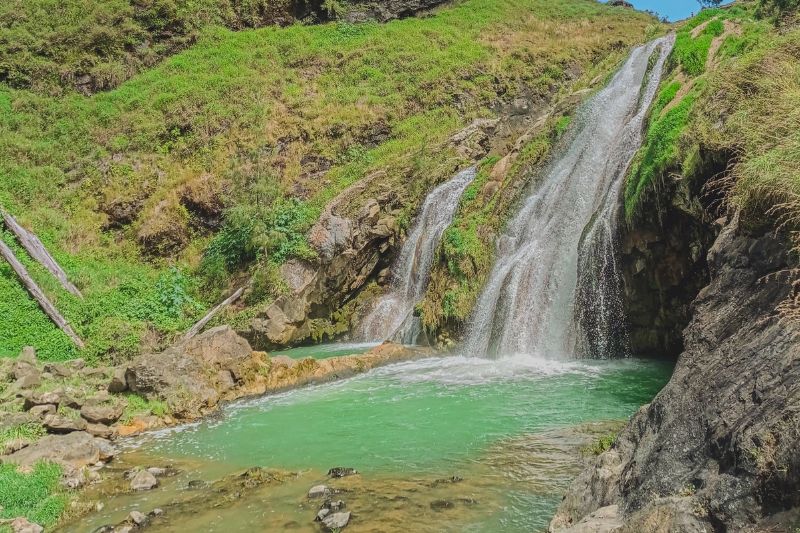
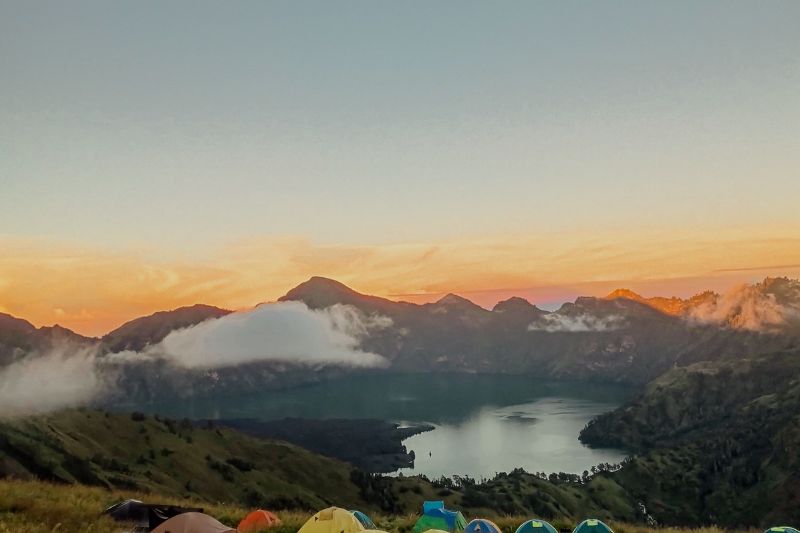
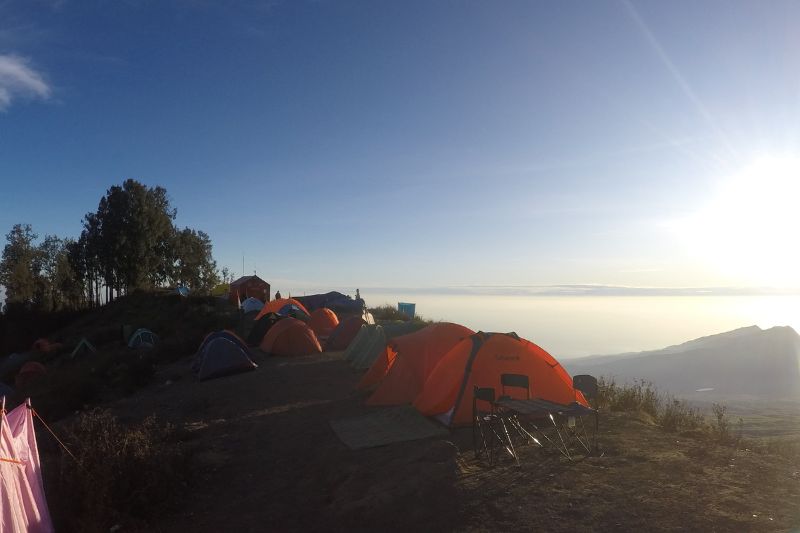
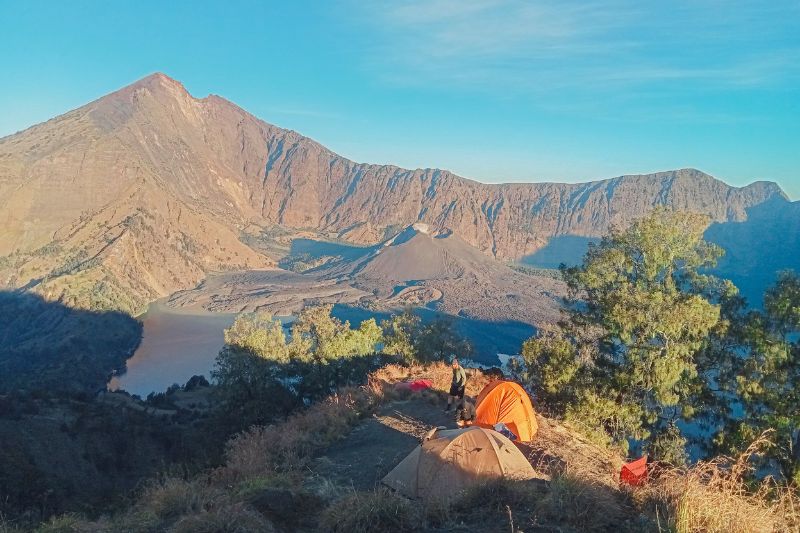
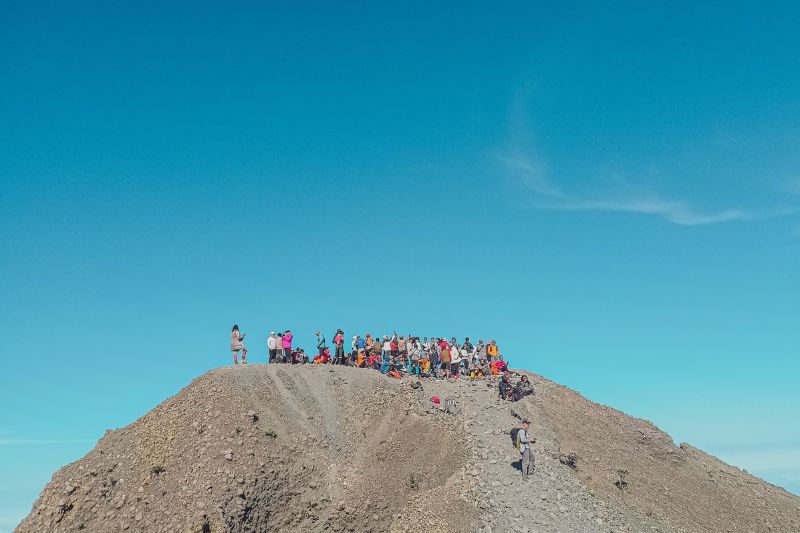
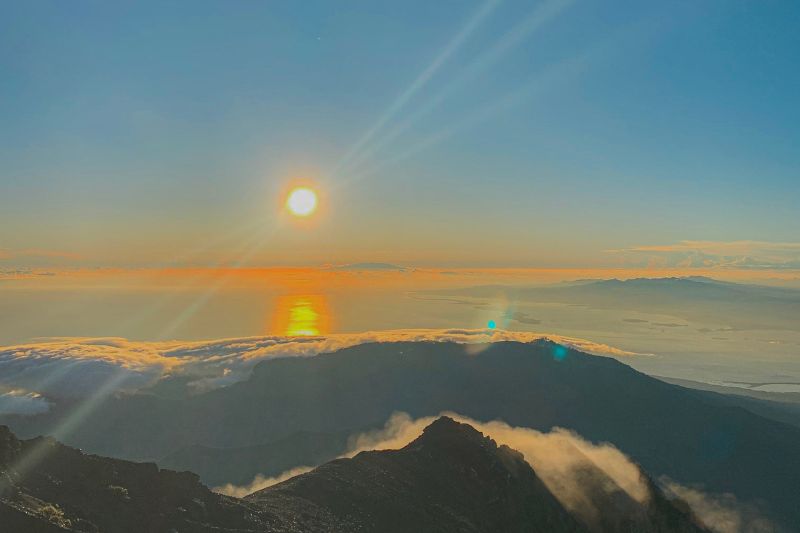
Mount Rinjani (Bahasa: Gunung Rinjani) is an active volcano located on the island of Lombok, Indonesia, within the Mount Rinjani National Park. Specifically, it's situated in the North Lombok Regency, a part of the West Nusa Tenggara province. The mountain is renowned for its stunning caldera, Segara Anak, and is a popular destination for trekkers.
Getting to Mount Rinjani from overseas, you'll need to fly into Lombok International Airport (LOP) in Lombok, Indonesia, and then transfer to Senaru or Sembalun, the primary starting points for Rinjani treks. You can also reach Lombok by flight and ferry from Bali or by fast boat.
Numerous airlines offer flights to Lombok, including direct flights from major Asian hubs like Singapore, Kuala Lumpur, Jakarta, Surabaya, and Bali.
There are daily nonstop flights from Kuala Lumpur Malaysia and Scoot offers 4 nonstop flights per week from Singapore Changi Airport (SIN) to Lombok International Airport (LOP).
April to October is the best period to climb Mount Rinjani because of the dry season. However as global climate changes, there is a high chance to rain anytime even at summer. Mount Rinjani National Park is closed during January to March period due to heavy rain and potential hazards on the trails.
The temperature in the morning before sunrise at the summit of Mount Rinjani (3726m) drops to freezing 0 °C – 3 °C. Mount Rinjani crater rim, during the night ( 2,639m) 8-10˚C, Senaru crater rim (2641m) 8-10˚C, Lake and Torean and camp area 8-12˚. Day time: almost in every place: 28 – 35˚.
The time it takes to climb Mount Rinjani varies depending on the route and individual fitness levels, but typically ranges from 2 to 4 days. A popular option is the 3-day, 2-night trek to the summit, which allows you to visit the crater lake and hot springs. A 2-day, 1-night trek to the crater rim is also an option, offering incredible views without reaching the summit or lake. For those with more time, a 4-day, 3-night trek offers a more leisurely pace.
No, climbing Mount Rinjani is generally not allowed without a guide and porters due to safety concerns, according to the National Park authorities. While technically possible, it's strongly discouraged, especially for international climbers. Guides and porters are required to help them, at least carry logistic. Trekking Rinjani without guide is still allowed only for domestic trekkers.
There are reported incidents where climbers lost their way, injured themselves or lost their lives on Mount Rinjani. At least in 2024, it was reported 2 international trekkers involved in an accident. They climb Mount Rinjani illegally, without a guide or a porter. One of them was found falling into a ravine and breaking several bones, because of following wrong paths, and the other one disappeared and has not been found until today. So that, many similar cases occurred before.
Book a Rinjani trekking package with us at Rinjani Nomad, we include mountain guides and porters in our tour package. Your visit has a great impact to support local community.
Guide & porters are carrying everything needed for you and the group – food, water, camping gear and cooking equipment. However, you need to carry your own backpack. With each backpack varying in size and weight, it would be impossible to estimate how many porters are needed.
However, if you need a porter to carry your own luggage, you can hire one on a reasonable price. Please consult before your arrival.
Tipping for guide and porter in Mount Rinjani is optional, but highly encourage, especially if you are satisfied with the service provided. You can determine the amount yourself according to your sincerity, ability, and satisfaction.
You should have, at a minimum, the following: a small backpack; a jacket; long pants; trekking shoes or running shoes with a good gripping sole; head lamp (if you’re attempting to go to the summit).
Yes, most definitely. If you are travelling and have more luggage than you need for the trek, you can leave the additional one at the departure point. In fact, it is always recommended to only take with you what you need for the trek, and leave everything else at departure. Y ou will have a much easier and better trekking experience. No extra cost applies.
Trekking insurance is provided and included in the trekking permits. Note that the insurance only covers evacuation and basic medical act. We still recommend you to have your own insurance paid for before trekking.